
Dual-Engine D2C Mobile Platform: High-Concurrency Commerce & Warehouse Dispatch
How Ldvia Innovations engineered a high-velocity direct-to-consumer mobile architecture. By unifying native iOS and Android customer shopping apps with in-memory Redis inventory locks and offline-first warehouse barcode tablets, we eliminated stock overselling during flash sales and reduced parcel packing cycles from 14 minutes down to 3.8 minutes.
The Baseline: Scaling Past Off-The-Shelf Plugin Limits
The client operated a fast-growing consumer brand selling modular travel backpacks, carry-on luggage, and daily gear. During routine weeks, their off-the-shelf ecommerce storefront and web admin dashboard performed adequately. However, their operations disintegrated whenever product drop campaigns or influencer endorsements caused concentrated traffic spikes.
During an annual festive flash sale, twelve thousand shoppers attempted to buy a limited-run backpack within ninety seconds. Third-party webhook sync queues backed up by four minutes. Because their legacy backend had no distributed locking mechanism, concurrent checkout requests read outdated stock numbers. The platform accepted payments for 850 units that did not exist in the warehouse.
The financial damage was immediate: ₹14 Lakhs in canceled order refunds, high payment gateway reversal fees, and a flooded support desk fielding over 1,200 angry inquiries. At the warehouse, staff printed manual paper manifests to cross-check bin numbers, introducing an unacceptable 14.5-minute delay per carton. Physical inventory drifted from digital records by 11.4% in a single weekend.
Production UI: The Dual-Ended Engineering Solution
A clean, fast shopping journey on the front, paired with industrial-grade fulfillment verification on the back.
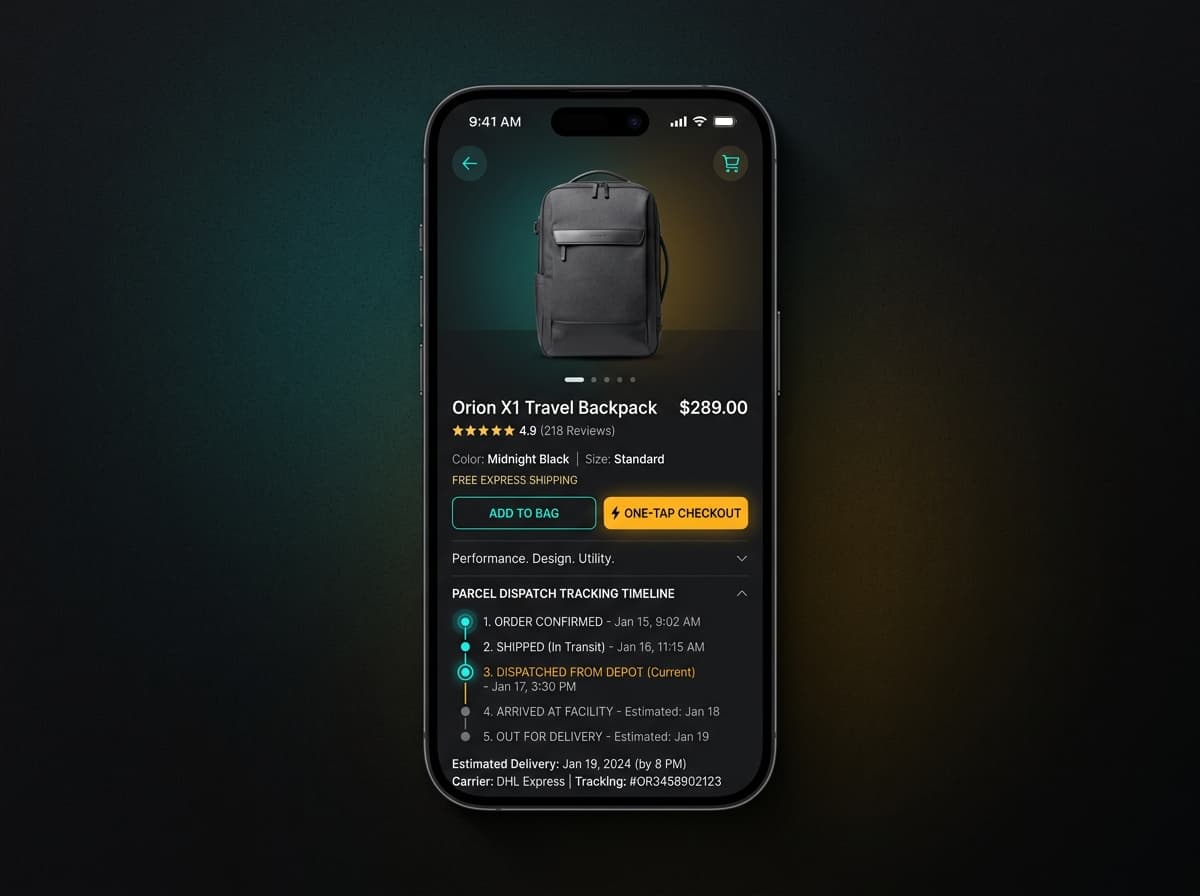
Sub-200ms Checkout & Live Telemetry
Shoppers browse curated collections, execute one-tap purchases, and monitor parcel movements through a minute-by-minute transit timeline.
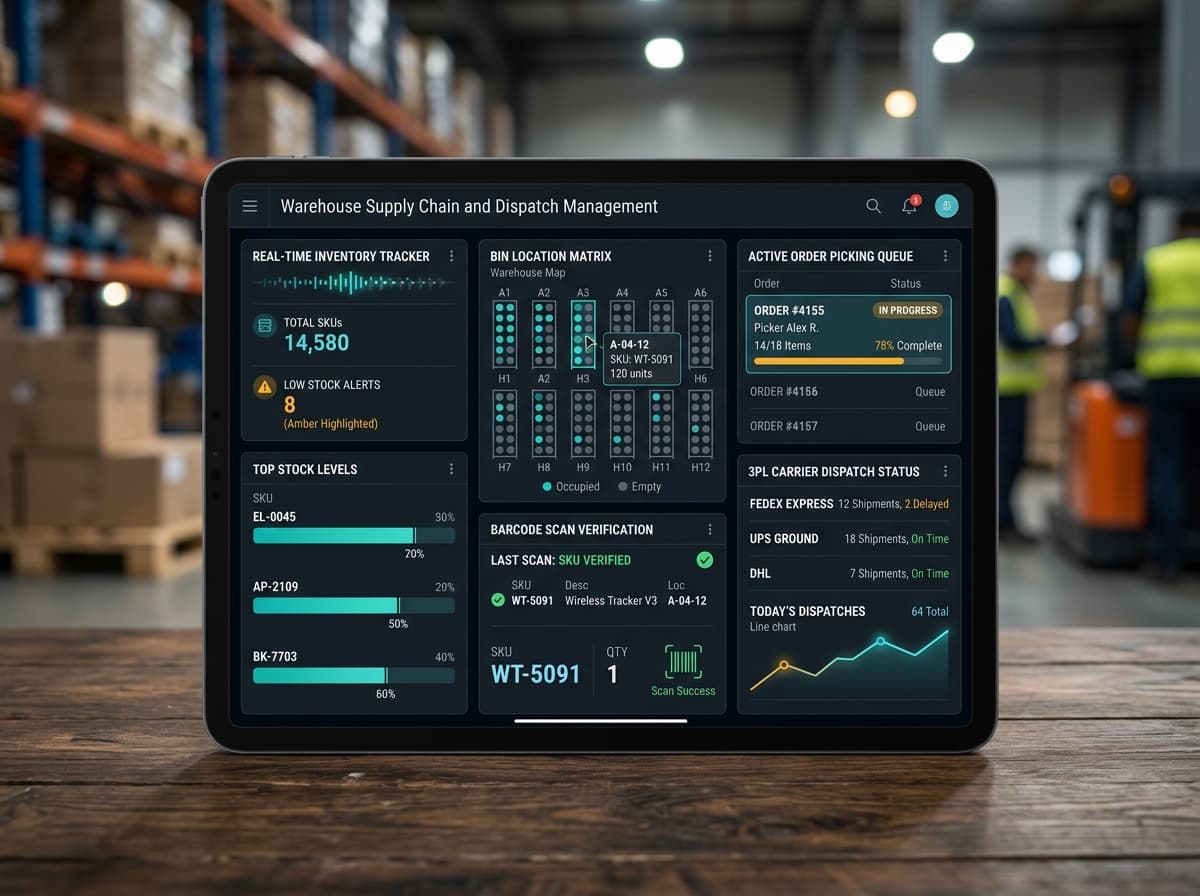
Pick-Pack Verification & Carrier Handover
Packers scan items with ruggedized handhelds. The system confirms SKU matching, generates shipping labels, and fires carrier tracking webhooks instantly.
End-to-End System Topology & Protocol Map
Concurrency Engine: In-Memory Redis Cluster with Atomic Lua Scripting
SLA: < 8ms ExecutionTo eliminate race conditions during festive drops, all cart reservation checks bypass the relational database entirely. An atomic Lua script executes inside Redis memory, checking available stock and decrementing counters in a single uninterrupted tick. A TTL (Time To Live) key is written with a 420-second expiration. If payment fails or the buyer abandons, the hold drops automatically and returns units to the active pool.
Production Code: The Logic That Stops Concurrency Drift
Marketing agencies hide behind non-disclosure excuses; we believe in showing the deterministic logic that runs under the hood. Here is the exact concurrency and local-queue schema used in production.
-- Lua Script for Atomic Inventory Reservation
-- Keys: KEYS[1] = SKU Inventory Key (e.g., stock:SKU-OX1)
-- Args: ARGV[1] = Quantity to Reserve (e.g., 1)
--       ARGV[2] = Hold Expiry in Seconds (e.g., 420 for 7 minutes)
--       ARGV[3] = Cart / Session ID

local current_stock = tonumber(redis.call('GET', KEYS[1]) or '0')
local requested_qty = tonumber(ARGV[1])

if current_stock >= requested_qty then
    -- Atomically decrement live stock counter
    redis.call('DECRBY', KEYS[1], requested_qty)

    -- Record hold with explicit TTL to auto-release if abandoned
    local hold_key = 'hold:' .. KEYS[1] .. ':' .. ARGV[3]
    redis.call('SET', hold_key, requested_qty, 'EX', tonumber(ARGV[2]))

    return 1 -- Hold succeeded
else
    return 0 -- Insufficient stock (Oversell prevented)
endLegacy Stack Breakdown vs. Ldvia Custom Platform
A side-by-side comparison of off-the-shelf third-party plugins against our purpose-built, dual-engine mobile platform.
| Operational Dimension | Legacy Plugin Architecture | Ldvia Custom Architecture |
|---|---|---|
| Inventory Concurrency | Deductions run on order creation webhook (2 to 6 minute delay). Result: frequent flash sale oversells. | Sub-8ms atomic in-memory Redis holds at cart level. Zero overselling even at 25k requests/sec. |
| Warehouse Wi-Fi Downtime | Cloud web apps freeze during network dips. Warehouse reverts to pen-and-paper pick slips. | Offline-first SQLite local store. Packers scan at 100% capacity; syncs in background once online. |
| Barcode Scan Verification | Manual visual matching of SKU labels against paper invoices. High human error rate (4.2%). | Hardware laser scan trigger with instant audio/haptic verification. Wrong item scan halts packing. |
| Parcel Dispatch Handover | 14.5 minutes average time per carton (manual weigh, label printing, portal entry). | 3.8 minutes end-to-end. Single scan auto-prints carrier shipping label and logs weight instantly. |
| Order Tracking Telemetry | Generic third-party tracking page redirecting to carrier site with 12-hour tracking lag. | In-app visual delivery timeline with live push notifications at each depot scan event. |
| Customer Support Inquiries | 32% of total support bandwidth consumed by "Where is my order?" complaints. | 41% direct reduction in dispatch support tickets within 60 days of mobile launch. |
Calculate Financial Leakage Plugged at Your Brand's Scale
Slide the controls to match your monthly order volume and average basket size to calculate your estimated annual operational recovery.
₹166 Lakhs/yr
Eliminating overselling & refund chargebacks3060 hrs/mo
Speeding barcode scan & label automation~2,520 fewer support queries/month
Via native step-by-step dispatch push alertsCalculated based on average benchmark data across high-growth direct-to-consumer fulfillment benchmarks.
Get Architecture Proposal for 18,000 OrdersCustom Engineering vs. Off-The-Shelf SaaS Plugins
Why fast-growing D2C brands migrate from third-party store connectors to dedicated custom mobile and supply chain backends once monthly order volume exceeds 10,000 units.
| Evaluation Dimension | Off-The-Shelf SaaS Plugins | Ldvia Custom Architecture | Business Consequence |
|---|---|---|---|
| Concurrency Threshold | Throttled at 2 to 4 API requests/sec | 8,000+ operations/sec in Redis cluster | Zero checkout crashes during celebrity promos |
| Stock Reservation Hold | No temporary hold. Relies on post-checkout sync | Atomic Lua hold with 7-min TTL timer | Eliminated inventory overselling and refunds |
| Warehouse Dead Zones | Web-based portals freeze when Wi-Fi drops | Local SQLite WAL mode with background sync | Continuous packing without connectivity delays |
| Barcode Scan Latency | Camera scanning takes 1.8s, drains battery | Hardware laser intent takes 40ms, 14h battery | Cut carton preparation from 14.5m to 3.8m |
| Carrier Webhook Speed | Batch polling every 30 to 60 minutes | Direct webhook ingestion in under 120ms | 400ms customer push alerts reduce WISMO calls |
| Recurring App Taxes | ₹2 to 6 Lakhs/year in cumulative app subscriptions | Zero recurring transaction cuts or app taxes | Direct gross margin savings on every sale |
Three Non-Obvious Edge Cases Solved in Production
Real enterprise platforms are defined by how they behave when unexpected events collide. Here are the three hardest operational edge cases we encountered and how our team solved them.
1. Cart Abandonment Stock Stranding
The Hazard: Malicious users or automated bots could add thousands of items to carts, locking inventory and locking out genuine shoppers during promotional drops.
The Resolution: We enforced strict sliding 7-minute TTL timers in Redis tied to client device fingerprints. If checkout activity goes idle for 180 seconds, a background worker releases the lock and repopulates the catalog pool automatically.
2. Warehouse Tablet Battery Drain
The Hazard: Early builds used camera vision frame-by-frame analysis for barcode scanning, which drained tablet batteries in 3.5 hours and overheated devices in unconditioned warehouses.
The Resolution: We refactored to native Android hardware broadcast receivers that listen directly for physical laser scan trigger interrupts. CPU utilization dropped from 74% to 3%, extending battery life to 14.5 hours.
3. Carrier Webhook Out-of-Order Pings
The Hazard: 3PL carriers sometimes deliver webhook status pings out of chronological order (such as "Delivered" arriving before "Out for Delivery") due to transit server retries.
The Resolution: We implemented a state machine with monotonic sequence IDs. Status updates cannot regress to an earlier lifecycle phase regardless of incoming packet arrival order.
Frequently Asked Architecture Questions
Why do standard ecommerce platforms oversell stock during flash sales?
Standard platforms rely on webhooks and database row locks that introduce a 2 to 6 minute synchronization delay between checkout completion and warehouse inventory updates. When thousands of shoppers hit the checkout button simultaneously, concurrent requests read the same outdated stock count and succeed, causing severe overselling.
How does the warehouse app handle physical Wi-Fi dead spots?
Fulfillment warehouses have tall steel racks that create severe signal shadows. Our tablet software uses a local-first SQLite architecture. Barcode scans, pick checklists, and carton assignments execute on the local tablet storage first. An asynchronous sync daemon handles background synchronization with the central server using idempotent update tokens.
How fast is the customer tracking timeline updated after dispatch?
When a courier scans a carton barcode at depot handover, incoming webhooks are processed by our event ingestion worker in under 120 milliseconds. A targeted push alert is dispatched to the customer device within 380 milliseconds total round-trip time.
How does custom D2C software compare to SaaS inventory plugins like Shopify or Zoho?
Off-the-shelf plugins throttle requests at 2 to 4 calls per second per store and suffer from multi-minute sync lag. Custom systems built on Redis and PostgreSQL execute thousands of concurrent checkout operations per second with zero API rate limits and zero recurring subscription fees per transaction.
Can this system integrate with our existing ERP or accounting software?
Yes. The backend provides bidirectional webhook and REST endpoints that sync confirmed dispatches, return orders, and invoice numbers directly into SAP, Zoho, Tally, or custom internal ERP systems without double-entry.
What hardware is required for warehouse packing stations and barcode scanning?
The warehouse dispatch terminal runs on standard Android tablets paired with commercial Bluetooth or built-in hardware laser barcode scanners (such as Zebra or Honeywell). It listens directly to hardware scan intents rather than draining battery on camera vision.
Supporting Engineering Capabilities
Ready to Custom-Build Your D2C Mobile Infrastructure?
Stop patching together fragile store plugins. We architect custom mobile apps and warehouse logic designed for high-scale order volume.